Friday, May 9, 2014

The Nervous System: Ted Talk with Todd Kuiken, A prosthetic arm that "feels"

"From an engineering standpoint, this is the greatest challenge one can imagine: trying to restore the most incredible machine in the universe." is something that Todd Kiuken said. What this means is that the nervous system and brain do so much it's incredible. The brain is like a power house and controls all bodily functions. The brain is responsible for all the complex parts and pathways that all come together to perform a specific function.

Todd Kuiken is a biomedical engineer that dedicates his time in finding new effective machines that help people that have arm amputations. His goal is to be able to create a machine that makes movement of the prosthetic arm simple. In the TED talk Todd Kuiken: A prosthetic arm that “feels” he begins by explaining what happens to the amputee patient when one loses a limb, and the odd effects that come from it known as Phantom Limb. Kuiken goes into detail over older prosthetic limbs compared to his newly engineered prosthetic. Kuiken uses the nerves remaining after an amputation to control an artificial limb. Places in the sensory brain are designated to certain areas of the body so for example, when one’s arms is amputated there is still a place in the brain for the arm. Although there is not an arm there to feel anything, because there is still a designated area in the brain for that limb it can still feel and touch. Once the brain starts to realize that there is not an arm there anymore to feel things other parts of the body take over that designated part of the brain. For example, in the video a man had lost his arm, but after awhile he started to feel his phantom limb in his chest! How crazy! The chest part of the brain had taken over for the arm to compensate for the lost limb. Kuiken has found a way to use this mind blowing fact to help amputees with their prosthetic arms. Using the phantom limb nerves and feelings the patients using his prosthetic can now feel through their prosthetic limb. I think this is soo mind blowing!!? Like who could have thought to ever make a prosthetic arm? Not only that, but to the point where it has sensations to it!!


System Update: Anatomy & Physiology

The anatomy of skeletal muscle is very complex and comes together to reach a common goal; to effectively connect the bones and muscles to each other for body movement and support. Starting at the microscopic level there are thousands of muscle fibers which contain the sarcoplasmic reticulum that in essence stores calcium for muscle contraction. Inside the myofibrill inside the SR contains the sarcomere. The sarcomere is made up of two primary components – thin filaments containing two strands of actin and a single strand of regulatory protein: 2 thick filaments of myosin, held together by the Z disks and the M line. This all comes into play when one looks closer into the anatomical and physiological background of muscle contraction. The physiological makeup of muscle contraction is a complex process that happens at a microscopic level. It all begins at the nueromuscular junction where ACh is released by the synaptic terminal which then binds to receptors on the sarcolemma. A change in the charge in the sarcolemma causes for an action potential to spread across the entire surface of the myofibrill along the T-tubules. The Sarcoplasmic Reticulum releases Calcium ions making the calcium concentration in the SR higher. Next, the calcium ions bind to the troponin that is on the tropomyosin attached to the actin. A cross bridge is then formed when the head of the mysosin attaches to the active sights. As the cross bridge is binding, pivoting, and detaching muscle contraction occurs under the sliding filament theory. as this happens ATP is being broken down as energy.


 http://www.ncbi.nlm.nih.gov/books/NBK57140/
 http://muscle.ucsd.edu/musintro/struct.shtml
 http://ceaccp.oxfordjournals.org/content/6/1/1.full

Hormones and Stress Blog

Acute stress also known as (short term stress) is the body's instant response to any situation that seems demanding or dangerous. Your stress level depends on how intense the stress is, how long it lasts, and how you cope with the situation. Chronic stress (long term stress) is caused by stressful situations or events that last over a long period of time. This could include having a difficult job or dealing with a chronic disease. Stress is something that everyone goes through, whether it be long term or short term, it just all depends on how you handle it and the situation. I can honestly say that I stress a lot... I know for a fact that it is not good for my body because I begin to break out a lot, I either want to eat everything I see or not eat at all because of the lack of appetite I have, and I start to over think and most of the time it's negatively, I get super sensitive and emotional and get irritated easily, it's bad enough that I'm already sensitive as it is! Since when I realized what stress really is to me as a high school student I've tried many different things to help cope with it. I started off by just writing everything in a journal or diary. After awhile this wasn't helping anymore because I did not have the time to just sit down and vent to my Journal.. :/ So I moved on to trying extra-curriculum activities and of course I picked to be in a sport that sometimes wouldn't reduced my stress but add on to it... I picked becoming a cheerleader. For the most part, it was where I would leave all my stress and problems at the door of the gym and walk in with a whole new, fresh, and good attitude. Up to my senior year it seemed like cheer wasn't my escape from stress and the real world anymore, it became part of it. I pushed through it and tried to have a positive attitude until the end of it. When cheer was starting to become my first priority in my life things got really hard on me. I pushed everything else to the side and fell behind, good thing I have amazing parents that care about me and not to mention one of the best teachers I've had, won't say any names.. ahem(Gardner) that helped me get through it and get right back in tract. So I want to thank them for everything they've done for me this year. I've always loved reading. Since I was a little girl I had been in many special education classes because at the age of 5 I still did not want to say a word. People thought that maybe
I couldn't talk or maybe I couldn't hear.. but nope I just wasn't ready to talk. I was fine, I was physically able to talk and hear, it was just really hard for me especially since I was a little girl trying to speak English and Spanish at the same time so nothing would come out but maybe some gibberish. So I went to these schools and classes to help talk and started me off with one language at a time, english at school and spanish at home. I got over this bump in my life and look at me now, Honors in my English classes. :) So yes you can say Ive worked really hard to meet other peoples standards because for a good while everyone didn't think I would make it too far. So going back to how I relieve stress, I love reading, what can I say.. I'm a little book worm. Reading was also my escape from stuff, but with cheer on my schedule I barely had time to even sit down and eat dinner. Now that cheer is done I have a whole summer to read because I don't have to worry about having 2 practices a day for 6 days a week.  I also learned that by writing a to do list can really help me out with pretty much everything. On one side writing what needs to get done now, and on the other what can wait a little bit but still has to get done. Credits to Mrs. Gardner for helping me out with this too. Not to mention.. MUSIC, music is my all time way to escape from the real world. Of course I can't live my life in a little music box but hey, music is my life. :) I listen to music all the time, it's what gets me going. I listen to it in the shower, after I get out of the shower, getting ready, in the car, outside, inside, anywhere and everywhere. I listen to all different types of music, hip hop, spanish, country, classical, techno, and nature sounds. :) Oh and just a couple of other things I do are going running and hugs !! When I have a lot on my mind I think running let's me clear off my mind..until I run out of breath and dying to catch air because I over did myself haha. I LOVE hugs !!!! I can give hugs to everyone. I think hugs are the best thing ever!! I love getting hugs also, makes me feel better. :) This is how I keep myself together, sometimes I break down but I have caring friends and family that help me get back up along with my stress reducing techniques.
 http://umm.edu/health/medical/reports/articles/stress

Pregnancy, Labor, & Delivery

Anatomical Changes

When a woman is pregnant, their uterus has the ability to enlarge. As the pregnancy continues, the uterus pushes up higher into the abdominal cavity. As the baby grows, the abdominal organs press against the diaphragm which now it is in the thoracic cavity. Now that it is in the thoracic cavity a result from that is flaring of the ribs. From the production of the placenta a hormone called relaxin causes pelvic ligaments and the pubic symphsis to relax, widen, and become more flexible.

Physiological Changes

There are many different physiological changes that occur to the body when pregnant. Some include, systemic changes like volume homeostasis, blood, and cardio vascular system, respiratory changes, urinary tract and renal function, alimentary tract, reproductive organs, and endocrinological changes. The body has to change its homeostatic mechanisms, as well as the physiological mechanisms to make sure the fetus develops properly. Because of this, the increase in blood sugar, the volume of blood being pumped by the heart , and breathing are required.

Causes of birth defects

Birth defects have a variety of causes, such as: genetic problems caused when one or more genes doesn't work properly or part of a gene is missing, problems with chromosomes, such as having an extra chromosome or missing part of a chromosome, and environmental factors that a woman is exposed to during pregnancy or using drugs or alcohol during pregnancy.

Types of birth defects

Breach birth is when the baby is positioned to come out of the vagina feet or booty first which is ideal and can be caused by weak uterine muscles, lack of amniotic fluid, and or problems with the fetus. Premature births can be lead back to problems with the mother’s uterus or infection in membranes. Premature births can be very dangerous due to the fact that the baby might not be completely developed to withstand life without their mother. There are numbers of birth defects from alcohol, drugs, external damage to the baby’s developmental features, problems with gene combining of mother and father in DNA, and many more. Downsydrome is caused by extra genetic material from chromosome 21 from the mother that does not have a corresponding chromosome from the father to match it, resulting in an extra 21st chromosome (trisomy 21). This usually happens if the mother is over 35 years of age. The likelihood of a breech baby is 1 in 25 births

 http://www.aboutbirthdefects.org/types/
 http://www.frca.co.uk/article.aspx?articleid=100641
 

Fetal Blood Blog

Fetal blood is created by the fetus itself, the fetus makes it's own blood. The fetus's blood type is determined by both of it's parents. All the blood types are A, B, AB, and O. The blood types A and B are both dominant, so if the fetus receives an A type from one parent and a B type from the other, the baby will have type AB blood. Since type O blood is recessive, both parents would have to give the baby an O type gene for it to have type O blood. If the baby has a different blood type from its mother, than the mothers body will make antibodies to the baby's blood type. Usually this isn't a problem during the first pregnancy. If during her other pregnancies the baby has a different blood type from its mother, the antibodies that her body created during the first pregnancy can cross the umbilical cord into the baby and hurt the baby. However there are shots that can be given to the mother during her first pregnancy and what it does is suck up all the baby's blood cells so that the mother's body does not make antibodies to it.

 http://www.newton.dep.anl.gov/askasci/mole00/mole00338.htm
http://www.ismusurizan.com/wp-content/uploads/2006/11/sixteen-week-fetus.jpg


Tuesday, April 22, 2014

3 Questions Blog # 11

What tasks have you completed recently ?

Recently I have completed Chapter 6 in Calculus. Maaaan, let me tell you.. it was really really hard. This chapter had 6 different sections in it. It seemed that every section got harder and harder. Just as soon as I thought that it was getting better it wasn't. In Anatomy we are almost done with the Endocrine System, this was also a tough chapter, but very interesting. Even though Anatomy has been kicking my butt.. I still LOVE this class. There is never a dull moment, every other day I go to this class I learn something new.

What have you learned recently ?

I have recently learned a lot about math. When I was in lower math classes I used to walk into my class and see what to me seemed like nothing but gibberish on the board with fancy looking S's and backward Z's. Well I have grown up now and I am in Calculus and I learned about those "fancy S's and the backward Z's". All of chapter 6 explains what they are, they are called integrals. I kind of think they are fun, but then again the problems are very tedious.

What are you planning on doing next ?

I am planning on keeping up with Chapter 7 now. My teacher kind of hinted to us that it was going to be a tough chapter. Sooo in my head I'm thinking.. Oh god, here we go again. Math isn't my favorite subject, but I sure can't escape from it.


                         http://static.guim.co.uk/sys-images/Guardian/Pix/pictures/2010/11/2/1288723378773/Zeta-function-equation-002.jpg


Sunday, April 13, 2014

Literacy Blog: Book Update

So, is it everything you hoped it would be ? What new things have you discovered that you didn't know ? What historical/cultural impact did/does science seem to be having on the people/places you are reading about?

Yes, this book is so good like how everyone told me it would be. I'm still at the beginning of the book where he is talking about his childhood and what it was like to live in Detroit. Throughout his first few chapters he talks about how hard his life would get and how he would turn it around and make the best out of it. He wasn't the wealthiest but wasn't the poorest either. For a period of time him and his brother Curtis moved with their auntie and uncle because their mother had gotten really sick and had to go to a doctor. Ben made a promise to himself that he was going to strive to do his best and be the best at everything he did. With that mind set he achieved many good things in his childhood life. Right now I am currently on chapter 8 and he is making college choices. 

Sunday, March 30, 2014

Literacy Blog: Book, What Book ?

So, what book are you reading for your glog ? Why did you choose this book ? What seems interesting, intriguing ?

I chose the book Gifted Hands: The Ben Carson Story by Ben Carson,M.D. to do my glog on. I chose this book because first of all i heard it was a really good book to read, and second because i want to know from Ben Carsons perspective of what it was like to be in the operating room performing one of the most difficult surgeries there is. Its scary to think that at the touch of your hands you have someones life or death. This book seems interesting because of his excellent performance in brain surgery and his overall life.


3 Question Blog #12

What tasks have you completed recently ?
It's the beginning of March and I can't believe how quickly time has flown by. Feels like just yesterday it was barely August and I was starting my senior year, now I only have around 2 months until I graduate !! Today we leave to Alburquerque for our cheer competition at UNM tomorrow. I'm really excited because it's at The Pit and it's going to be different from what we are used too. Usually it's fun riding the bus and just hanging out with your friends on the team  talking and laughing. The only thing that I don't enjoy is missing my last classes because it's a hassle trying to catch up on your school work. 

What have you learned recently ?
Recently I learned many different things in my classes. I really like my Anatomy class and I'm upset that I didn't get to go to it today because of our trip . We're going over the human senses, hormones, and stress. I think this subject/chapter is very interesting. I like it !

What do you plan on doing next ?
I plan on enjoying the month of March because not only is it 2 months away from graduation but it's the last month of cheer. The last cheer event would be our banquet in April. I'm really excited for finishing this year but it's like a bitter-sweet feeling. I'm happy I'm finally graduating but than again I'm sad that I'm done at Mayfield High School. I'll be starting a new chapter in my life .
                                         

3 Questions Blog #10

What tasks have you completed recently ?
Today we have a boys basketball game to cheer at against Onate High School, so it should be a fun night. I like cheering boys basketball because they seem to get into the game a lot more and I usually don't get bored. I also stand right next to one of my best friends in the side line so it's that much more fun because we're always talking to each other and messing around. The next day on Saturday we have our competition at NMSU and that for a fact I know is going to be a really long day, but I know we'll do good.

What have you learned recently ?
Recently in Calculus I learned how to find derivatives of logarithmic functions. This chapter wasn't too bad either. It's similar to the last chapter with having to memorize many different functions and know exactly when to use them or how to use them. We don't have our test on this soon so it gives more time to try to memorize all the different functions according to this chapter.

What do you plan on doing next ?
I plan on having all these functions memorized and getting all my homework done. Also I need to start enjoying the last games of my senior year that I get to cheer at. I would have to say that cheering at games are my favorite memories of being a cheerleader.


3 Question Blog #9

What tasks have you completed recently ?

This week has been fairly easy. Practice had gone pretty good and we got Thursday off so that was a plus. In math we finished going over Derivatives and Trig Functions. This chapter was kind of hard but at some points it got easier. In about 5 days it will be my birthday and I'm turning 18 years old. I'm not too sure how I feel about turning 18 and being an official young adult. It's crazy how fast time has gone by. I'm thinking for my birthday just having dinner somewhere with my family and then going out with friends later that night or Saturday. 

What have you learned recently ?
Recently I learned in Calculus how to find derivatives of trig functions. This section was kind of hard because of the fact that you have to memorize many different functions. And it would get confusing at times because they all seem so similar that here and there I'd mix up the functions and it'd cause me to be doing the problem wrong and I'd have to start all over. But after awhile you get the hang of it and it gets easier and easier. 

What do you plan on doing next ?
I plan on passing my Calculus test with a good grade. I'm not good at taking any kind of test at all but I always try my best. I just hope I got all the functions memorized and I don't mix them up during the test because I'm not going to get any of the answers right. I also plan on having a good time for my birthday because I've been kind of upset that I'm growing up so fast, but that's life.


Tuesday, March 18, 2014

3 Quesstion Blog #7

What tasks have you completed recently ?

Well in class we were asked to do an essay on our lives and how being in the Enlace class has maybe change it or added new experiences. It took me awhile to collect all my ideas and memories of being in Enlace. It was hard to write my essay because I didn't have the advantage of being in Enlace for a year or two like the other students had, but with the one semester I was in it, I learned many new things and did different community services. I finally finished it and submitted it, the only thing left to do was to wait and find out if I was chosen to be the 2014 Enlace Legislative Intern.

What have you recently learned ?

I recently learned about the muscles in our body and their functions. There are roughly about 656 to over 800 muscles in the body. Every muscle has their own function to do, but some might work together. Our muscles are attached to bone, or to other connective tissue structures. This helps because it lets us have common types of body movements. some of the common body movements are flexion, extension, rotation, abduction, adduction, circumduction, dorsiflexion, plantar flexion, inversion, eversion, supination, and pronation. There's a lot more to learn about the muscles this is the beginning.

What do you plan on doing next ?

I plan on trying to understand the concept of the muscular system. It seems like there is a wide range of information on the muscular system. I also plan on doing good in the rest of my classes.        


9781587790355-01.jpg

Tuesday, February 4, 2014

Neurophysiology Virtual Lab

What was the point of the lab ?
  • The purpose of performing this lab was to study the response of nerve cells to touch sensation or stimulus. This lab gave us the opportunity to dissect leeches virtually and identify their neuron sensitivity to various stimuli including feathers, probes, forceps and dyed oil. Moving forward in the lab we discover where the neuron cells are located in the leech, they're on the ganglia on the ventral side near the body wall. While observing the neuron sensitivity, we found out that the N neuron only responded to the forceps. The T neuron responded best to the probe, feather, and forceps. The P neuron responded to the probe only, and the R neuron did not respond to the stimuli, feather, probe, or forceps. The X neuron did not respond to any stimuli.
How is this applicable to people ?
  • We used leeches because they have simple nervous systems that execute most of the similar standards as the complex nervous systems like ours. This in the future will help us understand how powerful the nervous system is. By using the leeches for our lab, we will now know facts about the systems and the brain. 

Friday, January 24, 2014

3 Question Blog #8

What tasks have you completed recently? 
This week has been so so busy. I was one out of ten students in New Mexico to be chosen to be an Enalce Legislative Intern. So this past week I've been in Santa Fe getting private tours in the Capitol. The experience was amazing and such a great opportunity. From 6:30 in the morning to 9:00 at night it was non stop, running around the Capitol shadowing senators and representatives. I got to shadow Representative Rick Miera, Repreaentative Alonzo Baldonado, and Repreaentative Bill McCamley. 

What have you learned recently ?
I learned a lot on this Ingernship. I now kind of understand how the political world works, and let me tell you... It's chaotic. You have senators, representatives, presidents, guests, and many people passing by you. When I got to be on the floor of the roundhouse it was a whole different level of how these important people work. For example, I'm used to giving all my respect and attention to who ever is speaking, and down in the round house it was weird to see how everyone just gets up, walks around, mingle with others, walk in and out, while the speaker if the house is speaking. But I guess all I can say is they're important, busy people getting their business done.

What do you plan on doing next ?
I'm planning to get caught up in all my classes as my number one priority !! I was gone for a whole week and I feel like the world is crumbling down on me. I feel so behind in everything. Even though I tried my best to do my work up in Santa Fe but there just wasn't enough time. Anyways I'm just going to focus on catching up for sure. 

Sunday, January 5, 2014

Hip Dislocation

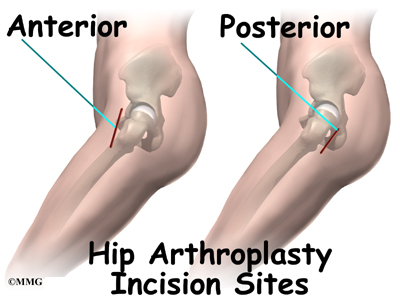
A dislocation is an injury to a joint, where the ends of your bones are forced from their normal positions. When this occurs it temporarily deforms and immobilizes your joint and causes pain. The hip joint is a ball-and-socket joint. It is formed between the ball of the femoral head and the socket of the acetabulum. To keep the joint stable, it consists of the fibrous joint capsule and ischiofemoral ligament. When a hip dislocation occurs the top of the femur moves out of its normal placement in the socket (pelvis). Most of the time the femur is pushed out in a backwards position (posterior dislocation), it is bent and twisted in toward the middle of the body. It can also be a forward direction (anterior dislocation), where it is bent only slightly and the leg will twist out and away from the middle of the body. There are two types of hip dislocations: congentinal or traumatic. When it's a congentinal hip dislocation, it is caused by dysplasia of the femoral head or acetabulum. A traumatic hip dislocation is a medical emergency and needs to be treated immediately because the injury can cause blood to stop reaching the femur, depriving it from vital oxygen supply. It is unlikely for a hip dislocation to occur during athletic events but is possible. Usually hip dislocations are caused by high impacted car accidents and falls from high places. When you dislocate your hip you minimize the movements you were capable of doing, for example; adduction, abduction, walking, jumping. running, you pretty much have limited mobility, but its temporary. There are many treatments you can do for a hip dislocation but the most important one to do first is put the hip joint back into place, that could be done at the doctors/hospital. If it's serious surgery can be done they can also determine if you also have a fracture, if so, then you will be put in a hip abduction brace. If the injury isn't as serious you preform R.I.C.E- rest, ice, compression, and elevation and also take, inflammatory/narcotic medications to reduce the amount of pain. Physical therapy for a hip dislocation will start with weight bearing by using crutches or a walker. Physical therapists will try gait training so that after the injury they can slowly regain the feeling of putting more weight on the hip and learning how to walk again. With that comes also stability to work on improving dynamic stability of the hip joint. Range of motion would be used to restore the range of motion of the hip to help heal the ligaments and muscles. Strengthening the hip joint by doing simple exercises. Last but not least progressing the functional activities with daily life exercises like walking up and down stairs, squatting, kneeling, getting in and out of the car, stretching, lunges, etc. Once it is more stable and strong you can try returning to athletic functions/performances at a low level and than progressive.
      
http://healthfavo.com/wp-content/uploads/2013/07/anterior-hip-dislocation-on-healthfavo.jpg
http://www.eorthopod.com/sites/default/files/images/hip_artificial_precautions_incisions01.jpg
http://www.drugs.com/health-guide/images/204825.jpg

References:
http://www.wisegeek.com/what-are-the-symptoms-of-a-hip-replacement-dislocation.htm
orthoinfo.aaos.org/topic.cfm?topic=A00352
http://www.patient.co.uk/doctor/Hip-Dislocations.htm
http://twinboro.com/body/hip/conditions/hip-dislocation-nj.html
http://emedicine.medscape.com/article/86930-treatment